
Create a Wallet
Create in a trusted environment and understand custody before moving significant value.
Open guide →imtoken · Multi-chain Wallet & Web3 Knowledge
A multi-chain wallet, blockchain network and Web3 knowledge hub from imtoken
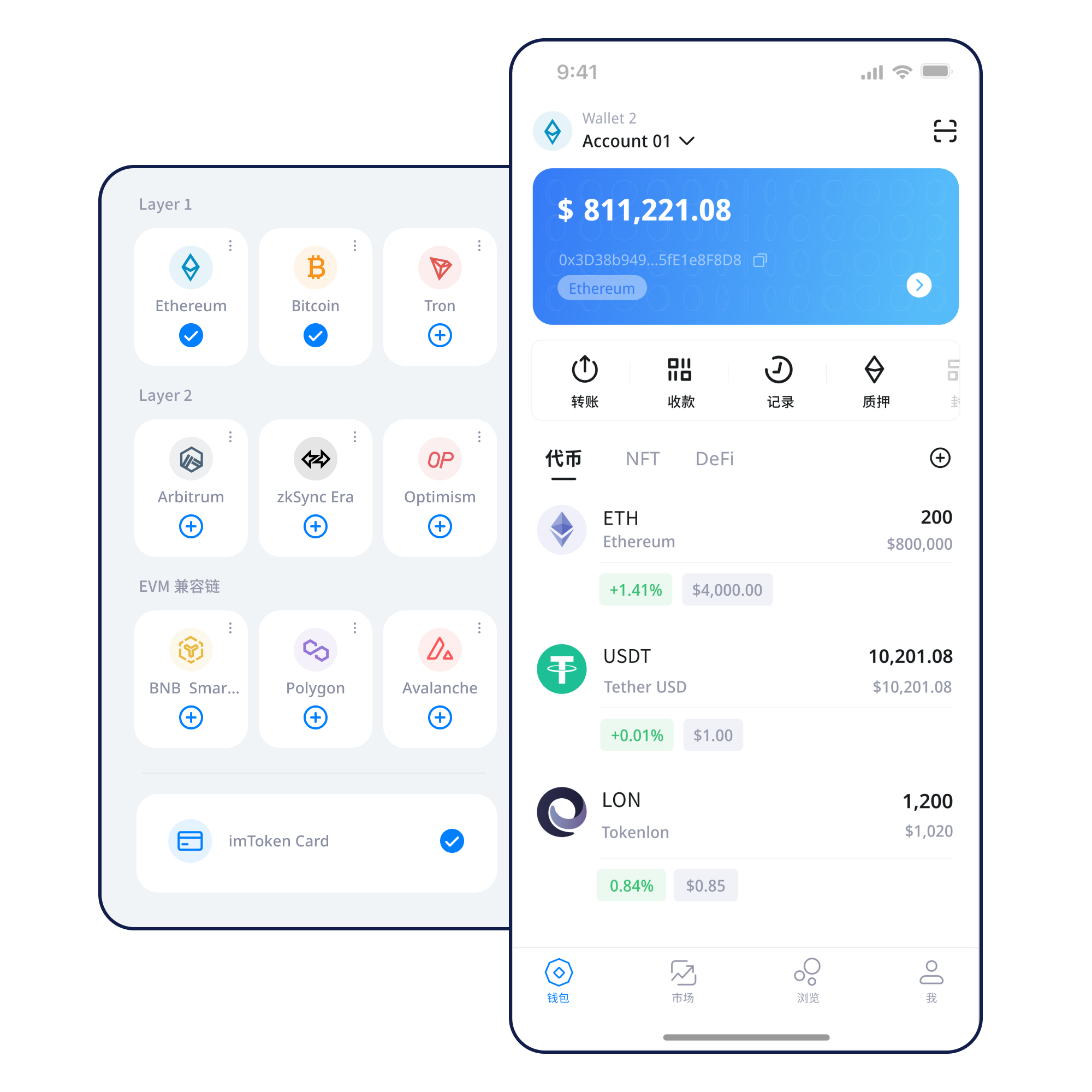
Use imtoken to organize multi-chain asset activity, choose the correct network, send and receive assets, connect to DApps and understand approvals. The knowledge center explains how networks, transaction confirmation and wallet security fit together without treating every request as a routine click.
Quick Tasks
Start from what you need to do. Each path explains the operation and the checks that matter before it reaches the chain.
Create in a trusted environment and understand custody before moving significant value.
Open guide →Keep the seed phrase offline, verify its order and avoid cloud or chat copies.
Open guide →Confirm both the receiving address and the intended network with the sender.
Open guide →Review the address, network, asset, amount and gas before submission.
Open guide →Verify the domain, account, network and every signature or approval request.
Open guide →Wallet & Assets
A wallet should help you see assets, understand transactions and manage Web3 access while keeping control credentials under your own custody.
See balances in the correct network context and distinguish token identity by contract rather than symbol alone.
Check the receiving address, network, amount, gas and transaction hash as one complete workflow.
Transfer guide →Manage networks, inspect assets and review transaction history from a mobile wallet interface.
Use browser-based wallet connections with explicit account, network, signature and approval review. Disconnecting a session does not automatically revoke on-chain approvals.
imtoken Web →Keep recovery material offline and treat every signature as a separate decision.
Networks
Network choice changes fees, confirmations, contracts and asset context. Use the topics below to understand what changes when you move between environments.
Multi-chain access does not make assets automatically interoperable. Each network has its own state, fees and contract environment, so context must be rechecked after switching.
Learn the network →Public chains use distributed nodes to maintain shared state. Transactions are propagated, included in blocks and confirmed under the rules of that network.
Learn the network →
EVM networks share a compatible execution model, but each chain still has its own gas asset, chain ID, contracts and transaction history.
Learn the network →
Layer 2 systems expand capacity in different ways. Bridge routes, withdrawal waits, data publication and finality should be understood for the specific system.
Learn the network →
Usage Path
Six steps connect installation, custody, network choice, transfers and permission review into one repeatable process.
Use this site’s download entry rather than an unknown third-party page.
Only use a trusted wallet interface and never type recovery material into an ordinary website.
Record the seed phrase offline and verify it without screenshots, chat apps or cloud storage.
Confirm network name, chain ID, gas asset and the DApp’s supported environment.
Check the address, network, amount and fee; consider a small test on a new route.
Keep the transaction hash, verify chain status and remove permissions that are no longer needed.
Web3 & DApp
Connecting a wallet, signing a message, signing a transaction and approving a token are different actions. Review them independently.
Security
Keep seed phrases and private keys under your own control, review transaction details, protect the device and assume third-party DApps and smart contracts can introduce risk.
Academy
Before moving assets, understand addresses, recovery material, private keys, networks, gas, transaction hashes, DApps and approvals. These concepts explain where value is recorded, what a wallet can sign and how to verify a result independently.
Read the starter guide →See how blocks, nodes and confirmations determine public transaction state.
Understand addresses, gas, contract calls and token approvals.
Compare base-chain relationships, bridge routes and withdrawal behavior.
Learn why connection and spending permission are different.
Build a routine around recovery material, devices and request review.
Use plain-language definitions tied to real wallet actions.
Ethereum · PoS
Understand protocol mechanics before considering participation. Staking does not guarantee returns, rewards can change and exits may involve waiting.
Learn how Proof of Stake, validators, reward sources, network state, withdrawals and exits relate to one another.
Read staking basics →Validator penalties, technical risk, waiting periods, smart-contract dependencies, third-party service risk and digital-asset volatility can all matter.
PoS & validators →Updates
Updates focus on product, network, security and service information without invented dates or unverified corporate claims.
Wallet guidance and network information are organized around clearer task paths.
Verify chain ID, gas asset and the destination network before a multi-chain transfer.
imtoken will not ask for a seed phrase, private key or verification code.
Use public transaction information for troubleshooting and keep recovery material private.
FAQ
Clear answers to wallet, network, transaction, Web3 and security questions.
Digital assets are recorded on their respective blockchains. A wallet manages keys, addresses and signatures, then presents public chain data in a usable interface.
You do. imtoken staff will not ask for them, and they should never be sent through a website, chat, email or support workflow.
Recovery cannot be guaranteed. A seed phrase or private key is a control credential, so a reliable offline backup should be completed before significant value is moved.
Each network has separate state. Even when the address format is the same, balances, contracts and transaction histories belong to different chains.
Gas is the network execution budget for a transaction or smart-contract call and is typically paid using the fee asset required by that network.
Network congestion, fee settings, nonce ordering or node propagation can all matter. Use the transaction hash on the relevant block explorer to inspect public status.
It is a primary index for checking public on-chain details such as status, block inclusion, sender, recipient and fees.
Usually not. Once confirmed by the network, a blockchain transfer generally cannot be unilaterally reversed by the wallet, so pre-send checks are important.
imtoken
All download actions use the same local download entry. Review the security guidance before importing a wallet or signing a Web3 request.